

People who come to mantra, yantra, tantra or Jyotiṣa from outside India often carry a question they rarely say aloud.
If I chant to Shiva, study the Goddess, or read my life through the grahas, am I becoming a Hindu?
Am I turning my back on the faith, or the values, I was raised with?
Our answer at Big Shakti is no.
We are not asking anyone to convert, to adopt an identity, or to call themselves anything they are not comfortable with. We do not proselytize. What we offer is an education in one of the world's great wisdom cultures, and what each student does with that education belongs to them.
What we are actually entering
When we study the Indian vidyās, we are entering a culture, not joining a tribe. It is a culture that prized certain kinds of knowledge above almost everything else, and went to extraordinary lengths to preserve them: memorizing the Vedas syllable by syllable, passing practices from teacher to student over centuries, testing them in formal debate, and refining them through layer upon layer of commentary.
That culture clothes its teachings in its own forms: its languages, deities, rituals, festivals and customs. These forms deserve respect, and we learn them with care. But beneath them lies something that belongs to no single people: the structure of the human psyche, and the reality of the invisible world that the sages explored from within.
Every culture holds fragments of this knowledge. We find it in the mystical currents of Judaism, Christianity and Islam, in Greek philosophy, in alchemy, and in Indigenous and shamanic traditions across the world. What distinguishes India is not that it discovered what others missed, but that it kept more of what it found, and kept developing it.
Cultures have always grown by borrowing. When a country lacks a food or a technology, it imports it from elsewhere, and over generations the import becomes its own. The chili pepper reached India from the Americas only in the sixteenth century, yet it is now inseparable from Indian cooking. The numerals the West uses every day were developed in India and carried westward through the Arab world. Knowledge of the inner life travels in the same way. A society holds its religion and beliefs as part of the outer structure of its life, then discovers that another culture understands something it does not: a method of meditation, a science of sound, a map of the psyche. That understanding adds to what it already has, so it is taken up, adapted, and in time absorbed. Buddhism, carried out of India, became something distinctively Chinese and then Japanese. Mindfulness practice, drawn from Buddhist meditation, has entered Western medicine and psychology. We are watching the same process today with artificial intelligence, developed in a handful of places and already being adopted, and changed, everywhere. This cross-pollination of ideas and methods is how human understanding advances. Yet borrowing can tip into appropriation, taking without understanding or acknowledgment, and so how we borrow matters as much as what we borrow.
Why so much survived in India
No tradition passes through history untouched, and India's did not either. Invasions, the fall of empires, colonial rule and the destruction of great centers of learning all took their toll, and much was lost.
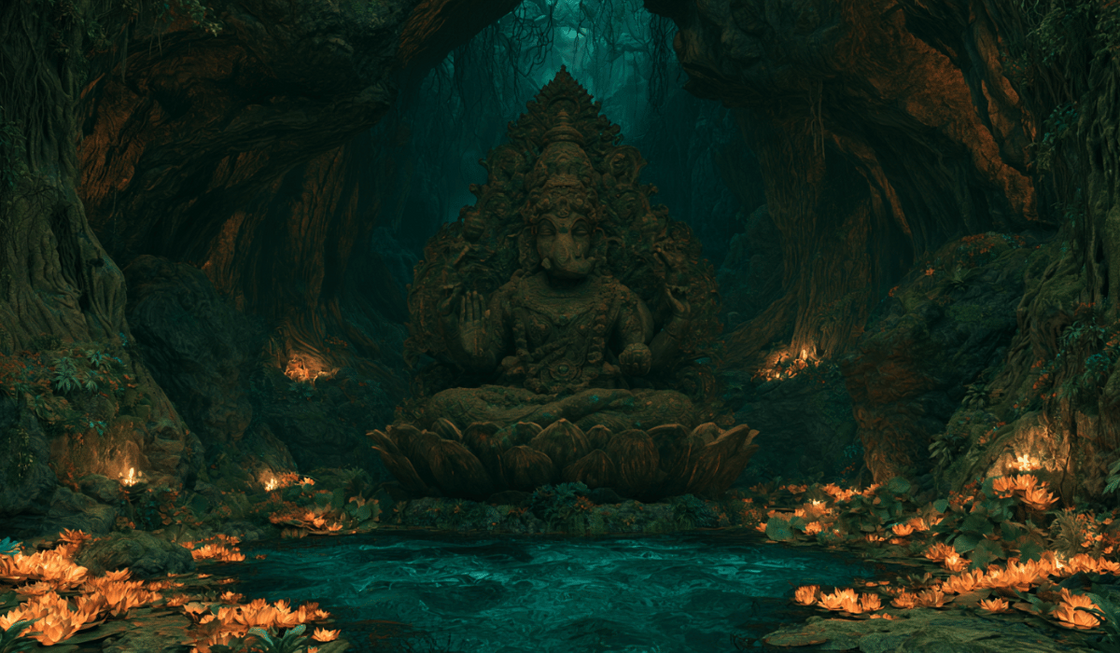
Yet a remarkable amount survived, and it survived as living practice rather than as a museum exhibit. Priestly families kept the Vedic chant alive through oral recitation. Monasteries, ashrams and hermitages, many in remote mountain regions, kept lineages of practice unbroken. A great deal of India's Buddhist learning found refuge in Tibet and Nepal. Temple priests, householders and the renunciate orders, including the swami lineages to which our own teaching belongs, each carried part of the thread.
There was also a structural reason. India never had a single central authority with the power to define orthodoxy and enforce it. Schools disagreed, sometimes bitterly, but they coexisted and argued, and formal philosophical debate (śāstrārtha) was a recognized institution. Europe's history took a different course. Church authority suppressed what it judged to be heresy, and the older pre-Christian traditions were largely cut off. Fragments survived, in folk custom, in the mystics, in the hermetic and alchemical underground, but the continuous line of transmission did not.
The result is that in India we meet one of the most systematically developed and best preserved bodies of spiritual knowledge in the world: a detailed map of consciousness, energy and the forces that move through a human life, together with practical methods for working with them.
A map of the psyche, not a list of meanings
The devatās, the deities of the Indian tradition, are among its greatest gifts to anyone interested in the inner life. The ṛṣis encountered certain forces in the depths of consciousness and gave them names, forms, stories, sounds and geometric shapes. Carl Jung, working on the other side of the world, called forces of this kind archetypes: patterns of energy and intelligence in the deep psyche that shape human experience in every culture and every age.
In our teaching we hold two views at once, and we hold them deliberately. The devatās are real, and the mantras are revealed rather than invented. They are also universal archetypes, living in every human psyche. This is our own synthesis. Not every Indian tradition would share it, and we say so plainly.
Why does this matter to someone who is not Indian?
Because the aim is not to collect information. Knowing what Durgā or Gaṇeśa represents is useful, since it gives the mind its orientation, but it is only a beginning. The aim is lived inner experience: to chant the mantra, contemplate the yantra and live with the myth until the force it names becomes something we recognize within ourselves. That is knowledge of a different order from technical or rational understanding, and it is open to anyone willing to do the practice, whatever their background.
Why the myths speak to everyone
Indian myth is extraordinarily rich, and its themes are universal. When Durgā confronts the buffalo demon Mahiṣāsura, we see our own struggle with the forces that keep us dull, stubborn and small. When the gods and the demons churn the ocean together, poison rises before the nectar of immortality, and Shiva must hold it in his throat. Anyone who has lived through a real transformation knows that sequence. When Arjuna collapses on the battlefield of Kurukṣetra, unable to act, and Kṛṣṇa teaches him about dharma, we watch a crisis every conscientious person eventually meets: what is right action when every choice has a cost?
Dharma and adharma, the order that sustains life and the forces that erode it, are not the private property of one religion. They describe how things work, within us and around us. Studying them through Indian stories sharpens our ability to see them at work in our own lives and in the world.
Becoming more fully ourselves
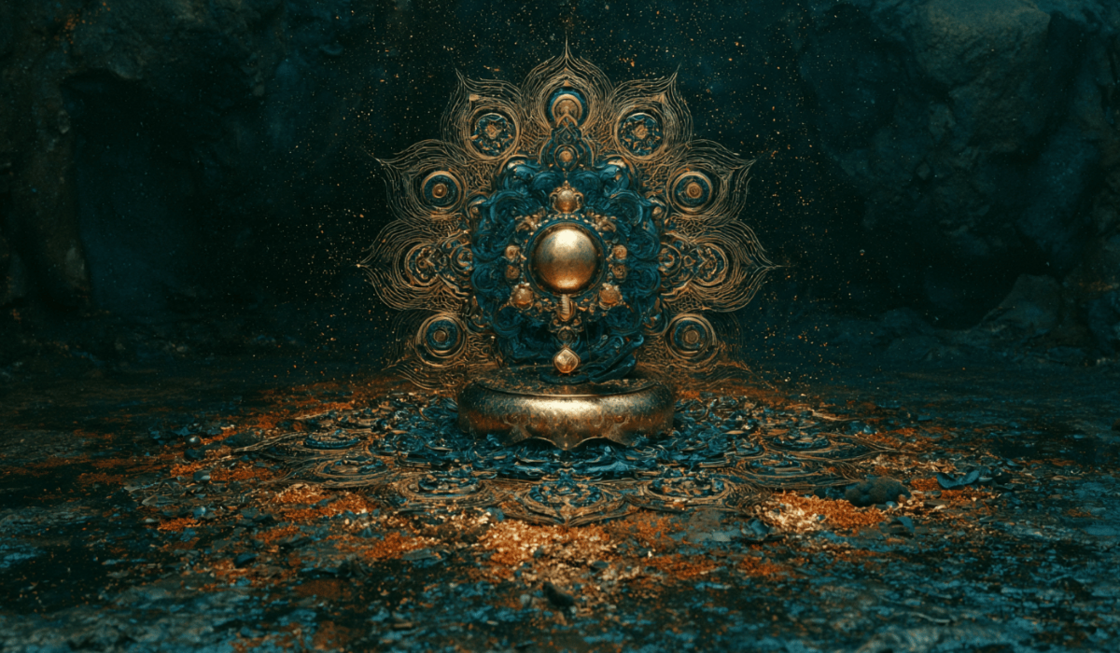
Jung called the lifelong process of becoming a whole person individuation: the gradual integration of what lives in the unconscious into conscious life, so that the ego comes into right relationship with the Self. Engaging consciously with archetypal forces, through practice, myth, dream and reflection, is one of the ways that process moves forward.
Jung also warned Westerners against imitating Eastern practices, taking on borrowed forms while leaving the inner life untouched. We take that warning seriously. Adopting a new name, a costume or a vocabulary is not transformation.
But imitation and genuine resonance are different things. For some people, a culture not their own turns out to speak to something real in them, and taking it to heart is not a costume but an act of recognition. For others, these teachings sit alongside the faith they were raised in and deepen it. Both are honest ways to practice, provided the work is lived from within rather than worn on the outside.
Either way, we become our own person: a unique weave of our life experiences, our upbringing, our losses and our loves, and the teachings we have gathered from many parts of the world.
An invitation, not a conversion
The world's cultures are a shared inheritance of humanity. Drawing on their richness to widen our view of life is neither theft nor betrayal. It does ask for respect: learning the tradition on its own terms, honoring the teachers who carried it, pronouncing its words with care, and not claiming more than we have understood. Met with that respect, the Indian tradition has long been generous with those who come to learn.
You do not have to become Indian, or Hindu, or anything else, to study mantra. You only have to become more fully yourself.
Study Mantra with Big Shakti
If you would like to bring these teachings into your own practice, we offer three ways to explore mantra with guidance from Dr. Swami Shankardev Saraswati.
Mantra Yoga ~ Foundations
Build a steady foundation in the psychology and practice of mantra. This on-demand course combines teachings and guided meditations to help you understand sacred sound, explore its relationship with the devatās, and develop a meaningful daily practice. No prior experience is needed.
Mantra Yoga ~ Intermediate
For those ready to deepen an established mantra practice, this four-week course explores the devatās, symbolism, yantra, Durgā practice, and planetary wisdom. We bring these teachings together through guided concentration practices and support for your personal sādhana.
Yoga of Mental Health Workshop: Mantra Therapy
Explore mantra through the lens of yogic psychology, with a focus on repetitive thinking and emotional well-being. This recorded workshop offers teachings, guided meditation, and practical ways to bring mantra into everyday life.

Comments