Yoga Psychology
A Guide to Understanding the Mind, Emotional Patterns, and Inner Transformation
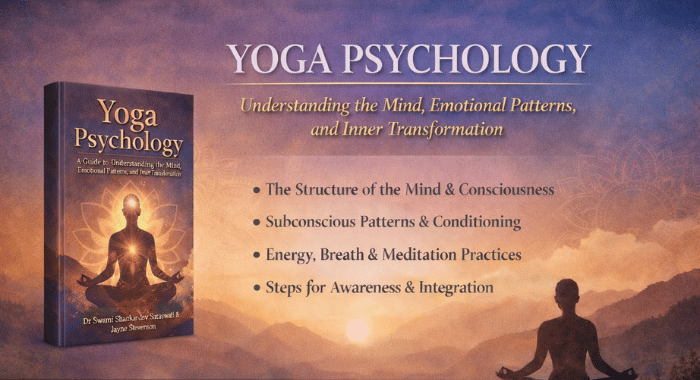
Most approaches to mental health focus on managing symptoms. Yoga psychology begins somewhere else entirely. It looks at the structure of the mind itself—how thoughts form, why patterns repeat, and how deeper change becomes possible.
This ebook, Yoga Psychology: A Guide to Understanding the Mind, Emotional Patterns, and Inner Transformation, brings together a complete system for exploring these questions. It is based on the full teachings from the Introduction to Yoga Psychology and Psychotherapy course, with additional material to support deeper study and reflection.
Inside this digital guide, you’ll explore:
The structure of the mind
- Manas, Buddhi, Ahamkara, and Chitta
- How perception, identity, and memory shape experience
How conditioning forms
- Samskaras (mental impressions) and Vasanas (tendencies)
- Why patterns repeat, even when we try to change them
The relationship between energy and mind
- Prana and the nervous system
- Why breath and awareness directly influence mental states
Emotional patterns and psychological states
- Anxiety, reactivity, and withdrawal as expressions of imbalance
- How the gunas (sattva, rajas, tamas) shape mental experience
Self-awareness as a method
- Developing the observing mind
- Creating space between reaction and response
Applied yogic methods
- Meditation as a psychological tool
- Mantra and subconscious repatterning
- Practical techniques for regulation and integration
What You’ll Learn Inside This Book
This book is structured as a progressive journey through the foundations and applications of yoga psychology — moving from understanding the mind, to working with it in a practical and therapeutic way.
Part 1: Foundations of Yoga Psychology
- What yoga psychology is and how it differs from modern psychological models
- The purpose of yoga as a system for mental and emotional well-being
- Key philosophical frameworks that underpin the teachings
Part 2: The Structure of the Mind
- The four aspects of mind: Manas, Buddhi, Ahamkara, and Chitta
- How thoughts, identity, and memory interact
- Understanding patterns, conditioning, and perception
Part 3: The Energy–Mind Relationship
- The role of prāṇa (life force) in mental and emotional states
- The three guṇas and how they shape behaviour and mood
- How imbalance in energy reflects as psychological disturbance
Part 4: Causes of Mental Disturbance
- Why anxiety, depression, and emotional instability arise
- The role of attachment, aversion, and unconscious patterns
- Insights from the Yoga Sutras and Bhagavad Gita
Part 5: Practices for Regulation and Stability
- Foundational practices for calming and stabilising the mind
- Breath, awareness, and meditation techniques
- Developing self-regulation and emotional balance
Part 6: Working with the Subconscious
- Saṁskāras (mental impressions) and behavioural patterns
- The role of repetition, awareness, and reconditioning
- Introducing mantra as a psychological tool
Part 7: Shadow and Integration
- Understanding the shadow within yogic and psychological frameworks
- Bringing unconscious material into awareness
- Integration rather than suppression
Part 8: Therapeutic Application
- Applying yoga psychology in real-life and therapeutic contexts
- Supporting mental health through structured yogic methods
- Bridging ancient wisdom with modern psychological needs
A Structured Path, Not Just Information
This is not a light overview or a collection of concepts. It is a complete working model of the mind, grounded in classical yoga and connected to modern psychological understanding.
Rather than presenting isolated ideas, this work follows a clear progression:
Awareness → Understanding → Regulation → Integration → Stabilisation
This reflects the traditional yogic approach to working with the mind—where insight and practice develop together, gradually reshaping underlying patterns.
You’ll find:
- A clear map of inner processes
- Practical exercises for direct experience
- Integration practices at the end of each section
- A bridge between yogic philosophy and therapeutic application
This guide is designed to be used, not just read.
Who This Is For
This digital book is suited to:
- Yoga and meditation practitioners wanting a deeper understanding
- Therapists, coaches, and practitioners working with the mind
- Students of yoga psychology and related disciplines
- Anyone interested in how patterns form and how they can shift
What You’re Getting
- 140-page PDF Guide to understanding the mind through the lens of Yoga Psychology.
- Written content from the Introduction to Yoga Psychology course
- Expanded explanations and additional context
- Integration exercises and reflection practices
- A structured, self-paced learning resource you can revisit
🛈 Digital book purchases do not include email support from teachers, imagery, visual resources, or video tutorials.