

Every meaningful journey involves two voyages:
- the outer one, measured in miles and itineraries, and
- the inner one, measured in insight and self-awareness.
Our recent travels from the sacred landscapes of India to the vibrant city-state of Singapore provided both in abundance. However, it was an unexpected afternoon at the Asian Civilizations Museum in Singapore that brought these two dimensions together in a way I hadn't foreseen, offering a deep reflection on the enduring connection of human consciousness across time, culture, and geography.
Arrival in Singapore: A Gateway Between Worlds
Singapore has always struck me as a city that casually holds paradoxes. Ancient trade routes and shiny financial towers exist side by side without conflict. The city sits at the intersection of cultures - Malay, Chinese, Indian, and European - and wears this diversity as a quiet badge of pride.
It was the perfect break between India's deep spiritual world and returning to the everyday rhythms of life.
We had only a brief window before our flight, and our route first took us to the National Gallery, a stunning colonial-era building on St Andrew's Road that now houses one of Southeast Asia's most important art collections. However, it was the nearby Asian Civilizations Museum, known locally simply as the ACM, that captured most of our afternoon and our focus.
The First Floor: A Thousand Years Beneath the Sea
The ground floor of the Asian Civilizations Museum stopped us in our tracks.
Here, displayed with quiet reverence, were thousands of pieces of Chinese porcelain and ceramics recovered from a merchant vessel that had sunk nearly a thousand years ago in the waters between Asia and the Arab world. The cargo had rested on the ocean floor, sealed and protected by layers of sediment and by the remarkable insulating properties of the rice stalks used to pack the items for transport. When archaeologists finally brought them to the surface, the glazes remained vivid, and the forms remained perfect as if time itself had stood still.
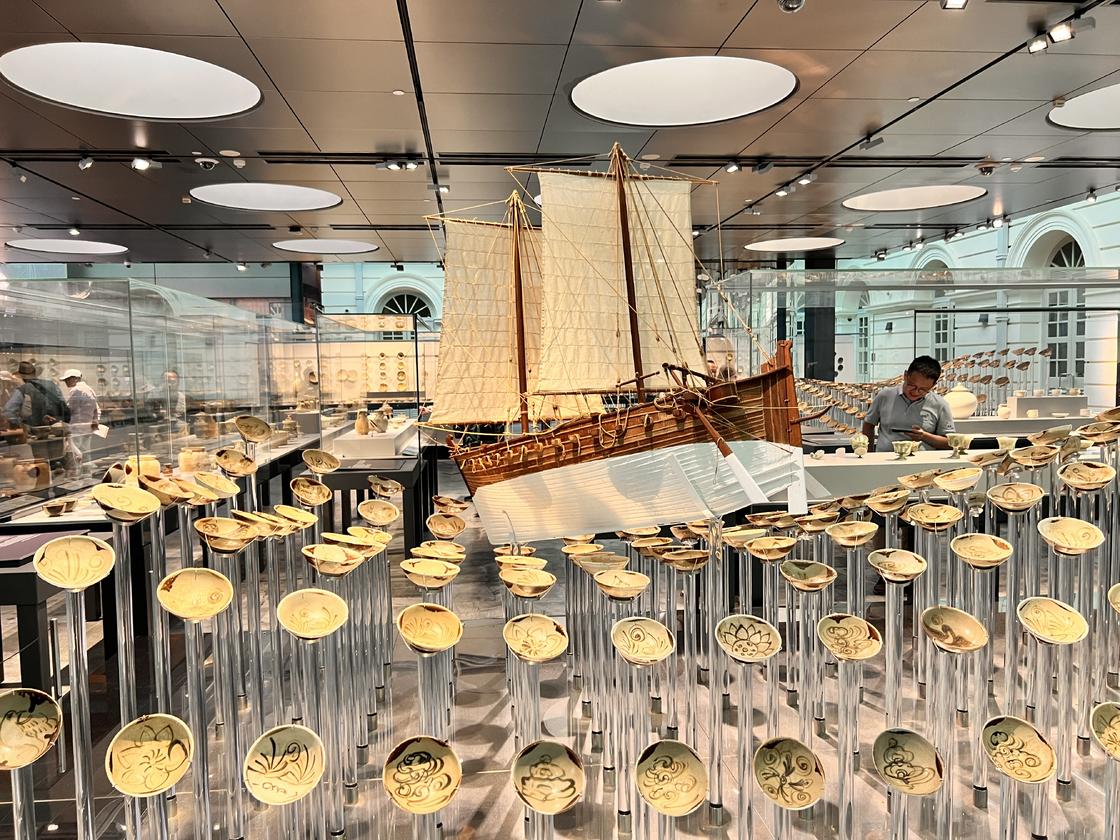
Standing before these bowls, ewers, and storage jars, each showcasing the signature blue, white, and celadon tones of Tang and Song dynasty craftsmanship, I felt something much bigger than simple aesthetic appreciation: This was proof, clear and undeniable, that Asia and Europe had been deeply connected through trade long before the modern era.
Chinese artisans made goods for markets in the Middle East, Persia, and beyond. European courts valued Chinese porcelain so highly that they sought to reproduce its manufacturing process across generations. The idea that trade globalization is a recent development completely falls apart here. The ancient world was already a global network of exchange.
What moved me most, however, was the deep ordinariness within the extraordinary. These weren't ceremonial objects made solely for temples or royalty. Many served everyday purposes such as cups for drinking, vessels for oil, plates for eating. Daily life carried across oceans. The continuous human need, expressed in clay and fire, has lasted over a thousand years.
It was humbling in the best way.
The Second Floor: The Language of the Collective Unconscious
Ascending to the second floor, the museum's collection shifts into an entirely different realm. Here, the objects are older, stranger, and more charged.
Ritual masks.
Devotional figures.
Guardian deities with multiple arms and fierce expressions.
Fertility symbols worn smooth by generations of reverent touch.
Bronze vessels cast for ceremonies lost to recorded history.
Hindu, Buddhist, Islamic, and animist traditions sit in peaceful proximity, each represented by its most powerful symbolic forms.
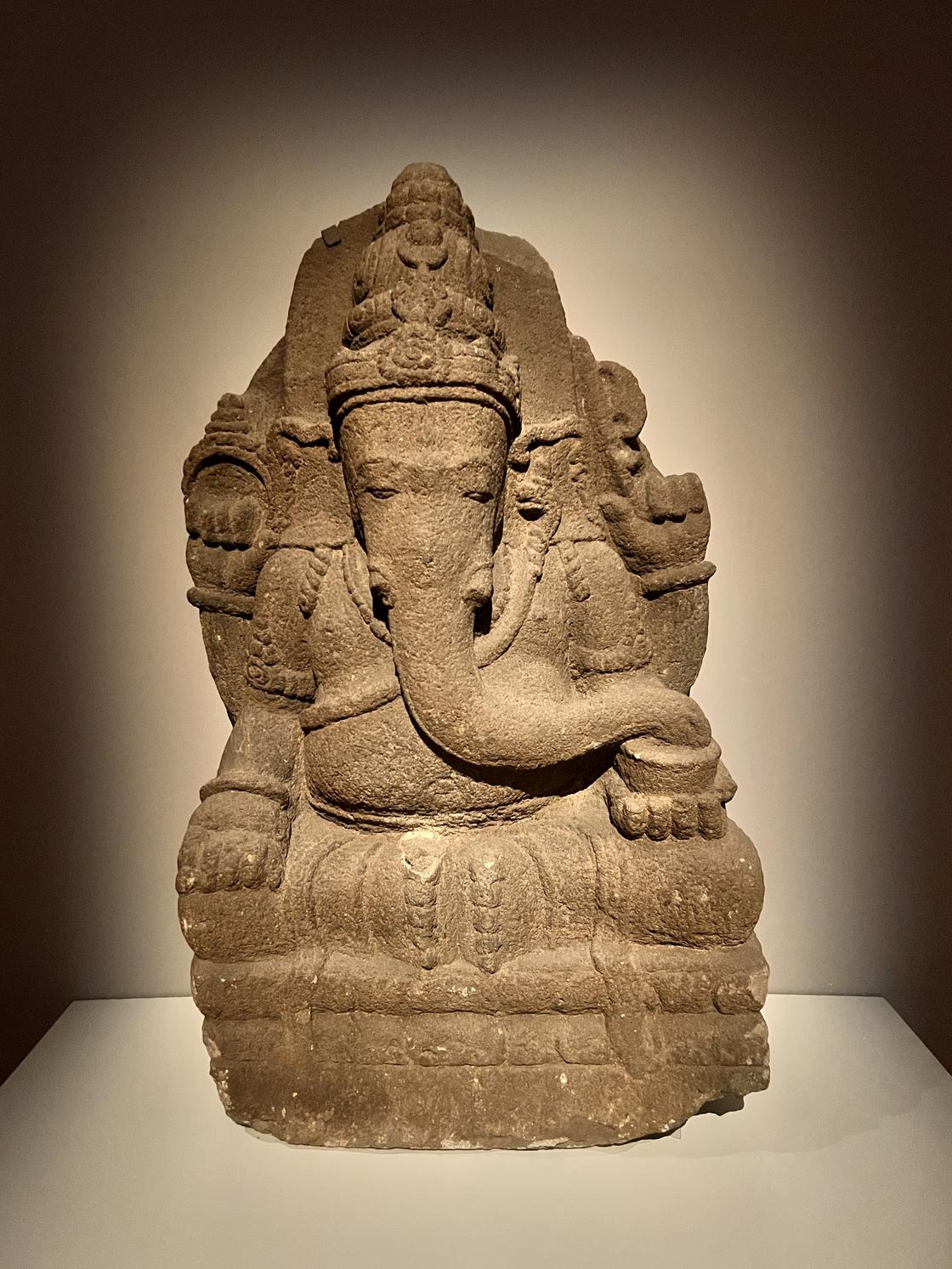
Ganesha - Java, Indonesia, 10th century
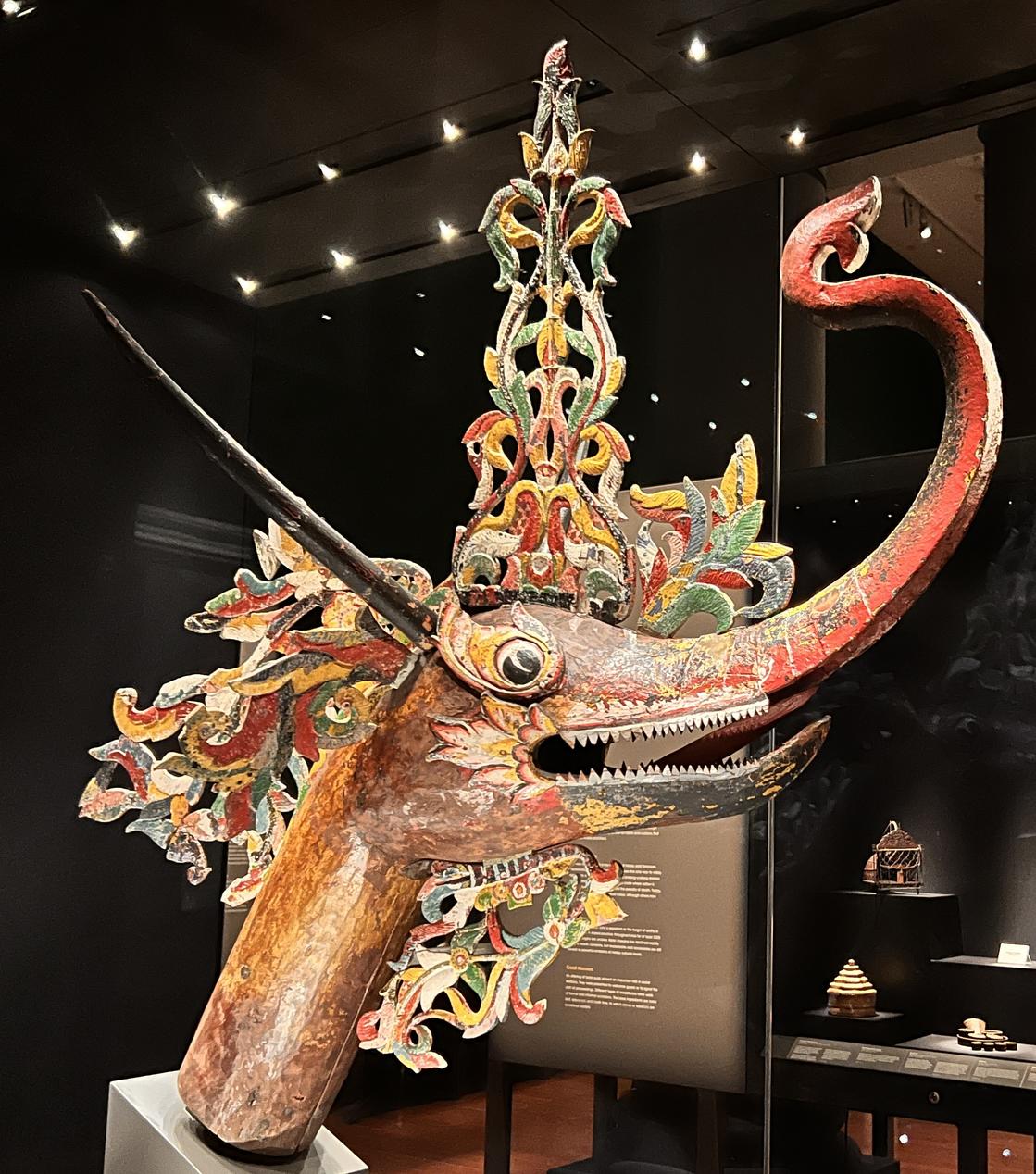
Makara (sea monster) - Malay palaquin ornament
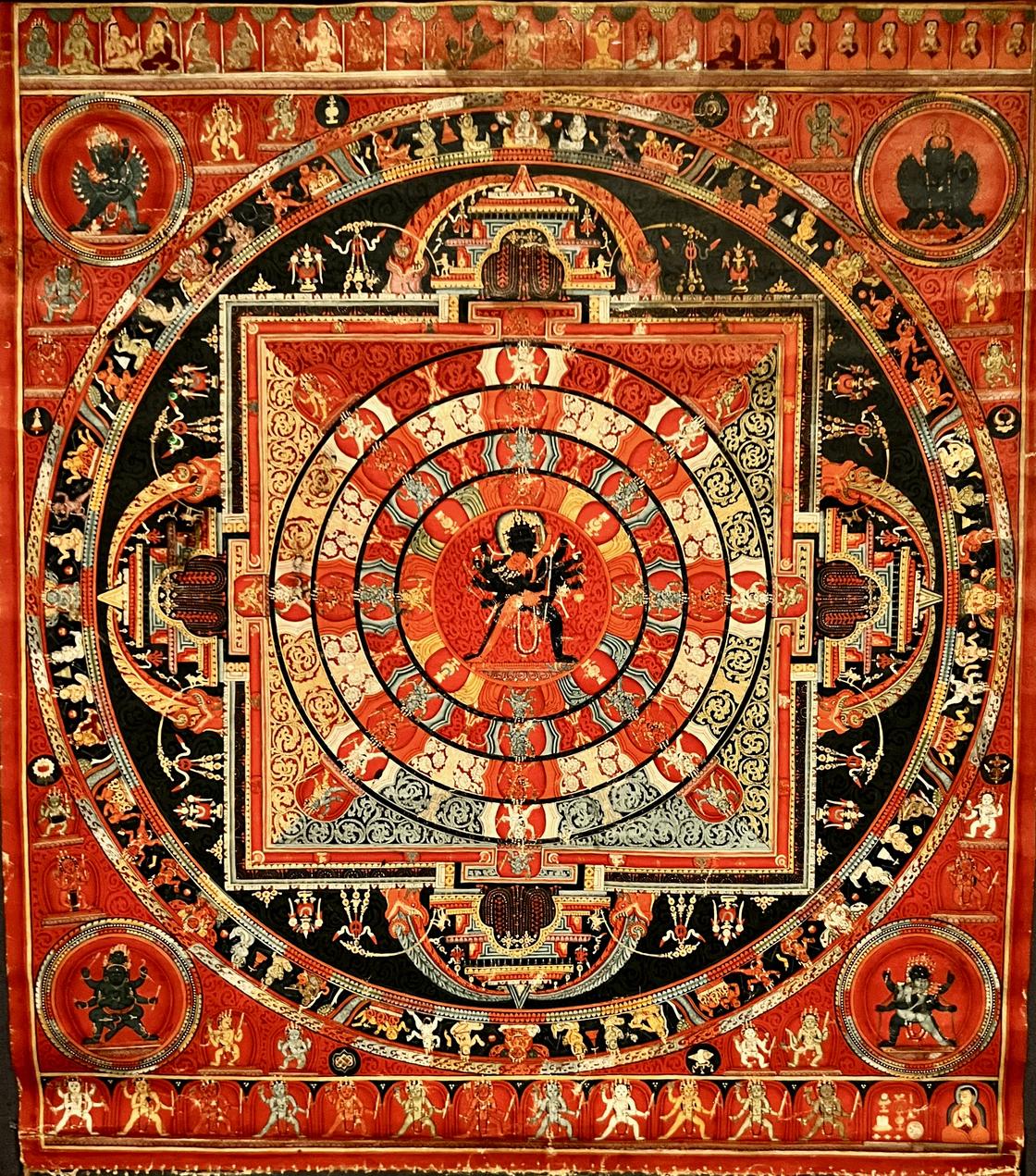
Mandala with Chakrasamvara and Vajrayogini - Tibet, 15th Century
These forms were not simply artistic or religious expressions. They were mirrors. Different cultures, separated by vast distances and centuries of time, had given shape to the same inner experiences. The same fears. The same aspirations. The same encounters with mystery.
Standing there, it became quietly obvious that the human mind has always spoken in symbols. What we often consider to be cultural differences are, at a deeper level, variations in expression rather than differences in essence. The same underlying movements of consciousness appear again and again, only the language changes.
The Continuity of Inner Experience
What struck me most was not the diversity, but the familiarity. A fierce deity from Tibet, adorned with skulls and flames, carries the same psychological energy as the wrathful protector figures of India. A fertility symbol from Southeast Asia reflects the same reverence for life found in ancient Greek and Egyptian traditions. A mandala, carefully constructed with geometric precision, mirrors the universal human impulse to bring order to the inner world.
These are not isolated cultural artefacts. They are expressions of a shared inner architecture.
In yoga psychology, we speak of chitta - the field of impressions that holds the accumulated patterns of human experience. When viewed in this light, the museum was not simply a collection of objects. It was a living archive of consciousness itself. Each piece, whether created for ritual, protection, devotion, or daily life, carried the imprint of human experience shaped by the same fundamental forces: perception, memory, identity, and meaning.
The outer forms differed. The inner movement was the same.
Time, Memory, and the Illusion of Separation
There is a tendency in modern thinking to assume that we are fundamentally different from those who lived centuries ago. More advanced. More informed. More developed. Yet, standing before these objects, that illusion quietly dissolves.
The same questions that occupy the modern mind were present then:
- How do we live with uncertainty?
- How do we understand suffering?
- What is the nature of the self?
- How do we find stability in a changing world?
The tools and contexts may differ, but the inquiry remains unchanged.
Yoga psychology suggests that the mind operates through patterns that repeat across time - samskaras and vasanas that shape perception and behaviour. When we look at history through this lens, we begin to see continuity rather than fragmentation. Humanity is not a series of disconnected generations. It is a continuous unfolding of consciousness, expressing itself through different cultures, languages, and environments.
The Role of Symbol in Understanding the Mind
One of the quiet teachings of that afternoon was the importance of symbol. Modern culture often favours literal thinking. We seek direct explanations, measurable outcomes, and clearly defined answers. Yet the deeper layers of the mind do not communicate in this way. They speak through images. Through metaphor. Through feeling. Through symbol.
The traditions represented in the museum understood this well.
- A deity with multiple arms is not a literal being, but a representation of the many capacities within the human psyche.
- A mandala is not simply decorative geometry, but a map of inner order.
- A guardian figure at a temple gate is not merely protective, it reflects the psychological threshold between the known and the unknown.
In yoga psychology, this symbolic language is recognised as a bridge between the conscious and unconscious mind. It allows aspects of experience that cannot be easily articulated to be seen, felt, and gradually understood.
The Inner Journey Within The Outer Journey
As we moved through the museum, it became clear that the outer journey (the physical movement across countries) had quietly been accompanied by an inner journey.
India had immersed us in the living traditions of yoga and spiritual inquiry.
Singapore, in its own way, provided reflection. A moment of integration. A space to observe.
The museum became a kind of mirror, revealing not only the continuity of human consciousness across cultures but also the continuity within oneself.
The same patterns we observed in ancient artefacts exist within the modern mind.
The same movements of desire, fear, creativity, and meaning continue to shape experience.
The journey, then, is not only about travelling outward.
It is about recognising these patterns within.
Returning With a Different Perspective
By the time we left the museum, something subtle had shifted. There was a quiet sense that the world is far less fragmented than it appears. Beneath the surface differences of culture, language, and history lies a shared field of human experience.
When we begin to study the mind (whether through yoga psychology, meditation, or simple self-observation) we start to recognise the same patterns within ourselves that have been expressed across time.
The same restlessness of the mind.
The same search for meaning.
The same capacity for awareness.
Yoga psychology describes this as the movement from identification toward observation; from being caught in the fluctuations of the mind to recognising the awareness in which those fluctuations occur.
In that recognition, a different kind of connection becomes possible. Not one based on external similarities, but on a shared inner reality.
A Closing Reflection
Travel often promises new experiences, new perspectives, and new discoveries. But occasionally, it offers something quieter: A reminder that what we are seeking outwardly has, in many ways, always been present.
Across time, across culture, across geography, human beings have been engaged in the same essential inquiry:
What is the nature of this experience we call life?
And who, or what, is experiencing it?
The forms change.
The languages change.
The symbols evolve.
But the inquiry remains.
And perhaps that is the most meaningful connection of all.

Comments