


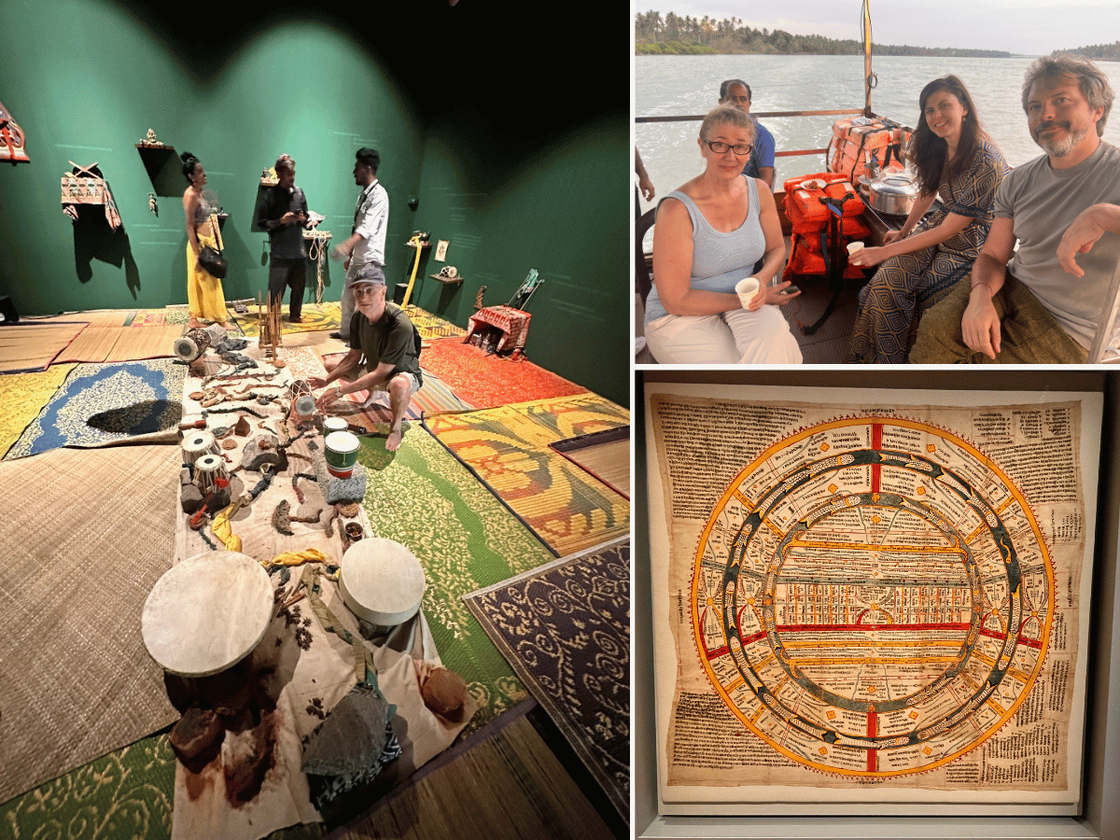
We have returned from India, and the experience has left its mark — not just in memory, but in the body itself.
One of the most profound experiences we had was an Ayurvedic massage in its traditional form. If you have only ever experienced a Western-style massage, what you find on the Ayurvedic table is something altogether different. The table itself tells you this immediately. It is wide, wooden, and slightly curved, designed not just for comfort but for function. It is designed to hold oils, warm milk, herbal decoctions, and medicinal preparations, which are applied generously and deliberately throughout the treatment.


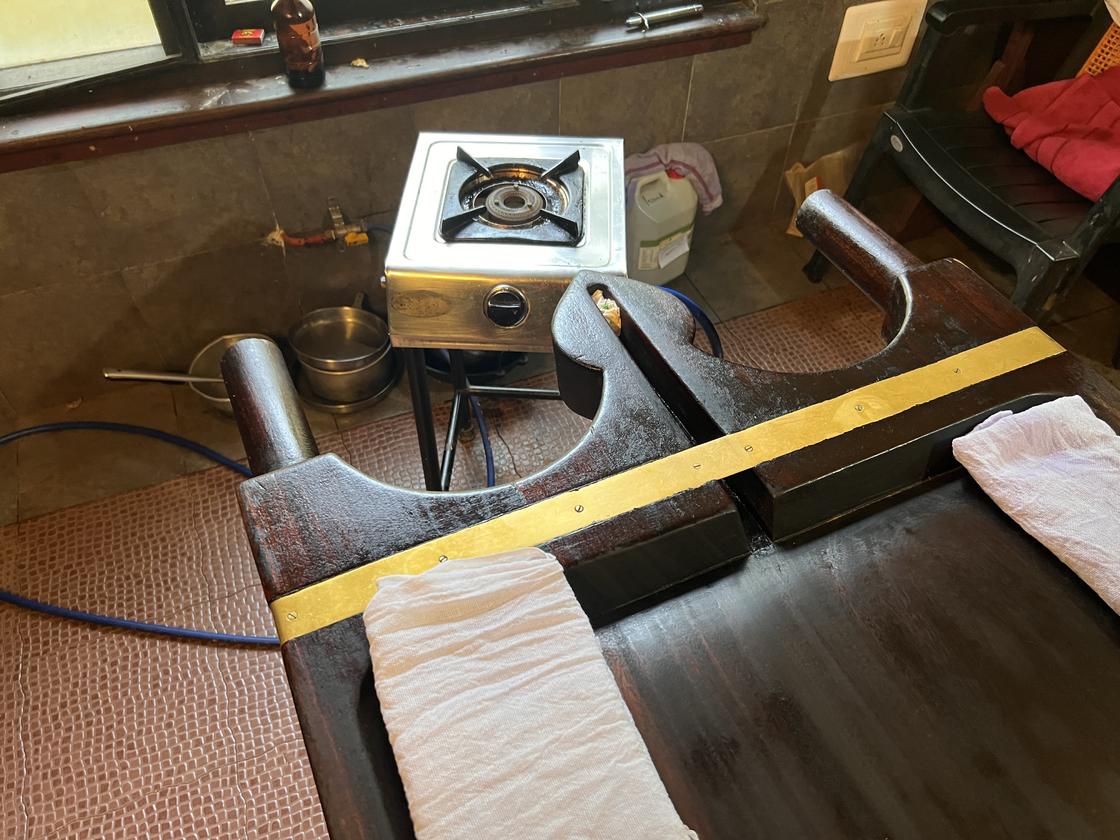
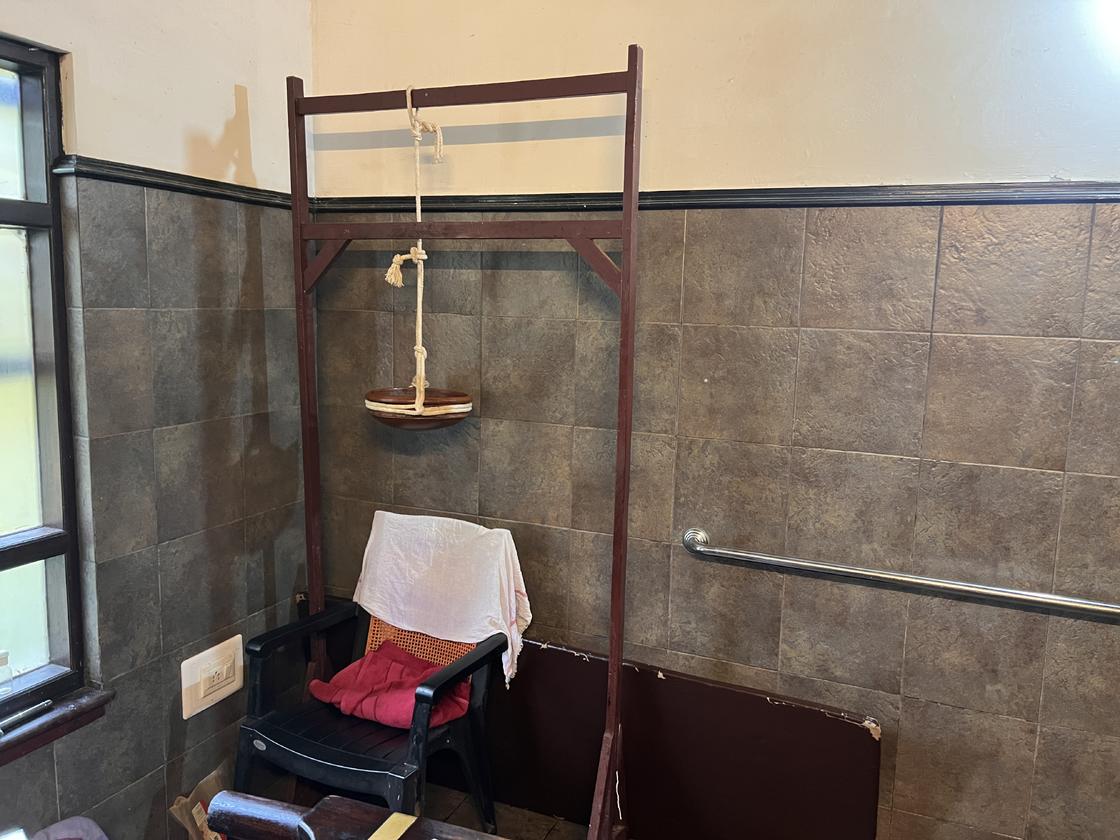
In Ayurveda, the body is not simply rubbed and loosened. It is medicated. The substances used are selected according to your constitution (dosha), your condition, and the season. They are chosen for their specific therapeutic properties. Warm oils infused with herbs are worked deep into the tissues to draw out toxins, nourish the joints, calm the nervous system, and restore circulation to areas that have become stagnant or depleted.
The treatment works on multiple levels simultaneously:
- the muscles
- the connective tissue
- the joints
- through the skin
- the internal organs.
What struck us most was its intentionality. Every stroke, every substance, every sequence has a purpose rooted in thousands of years of clinical observation. This is medicine in the oldest and most integrated sense where the body is understood not as a machine to be fixed, but as a living system to be brought back into balance.
Yoga psychology operates in much the same way. It does not merely soothe the mind. It works deliberately to reorganise its deeper patterns.
Both systems remind us that healing is layered, methodical, and patient.
Whilst our trip was incredible, we are glad to be back. And we are grateful to continue this work with you.
Yoga Psychology and Mental Health
Travel does something important to the mind. When we step out of our familiar environment, the habitual grooves of thought loosen slightly. Perspective widens. Certain concerns fall away. Other priorities become clearer. We feel grateful for the landscapes we encountered and the people we met. And yet, there is a particular satisfaction in coming home — to stillness, to routine, and to the work that feels most aligned.
For us, that work is yoga psychology.
Over the coming months, this is where our energy will be directed: deepening, clarifying, and making practical the extraordinary psychological map offered by the yogic tradition. While modern psychology offers valuable frameworks, the yogic system adds dimensions often overlooked: the layered structure of mind, the role of unconscious impressions, and the possibility of stable witnessing awareness.
In the coming months, we will be developing more material that applies yoga psychology directly to anxiety, depression, trauma, and chronic stress — not as theory, but as lived practice.
If you are new to this integration, you may find it helpful to read:
These articles outline how awareness, vibration, and inquiry work together to reorganise the psyche.

Why Yoga Psychology Matters
Yoga psychology sits at the centre of what we teach because it addresses questions that many sincere seekers eventually confront:
Why do the same patterns repeat, even when we understand them intellectually?
Why do certain reactions feel stronger than our conscious intention?
How do we work with the darker, less comfortable aspects of the psyche without denying or indulging them?
The yogic model of mind — with its understanding of samskaras (mental impressions), ego structures, and unconscious conditioning — offers both explanation and method. It does not stop at insight. It provides practices for integration.
As the Dhammapada reminds us:
“We are shaped by our thoughts; we become what we think.”
Understanding how thought-patterns form and how they are sustained is not abstract philosophy, but rather the foundation of mental health.
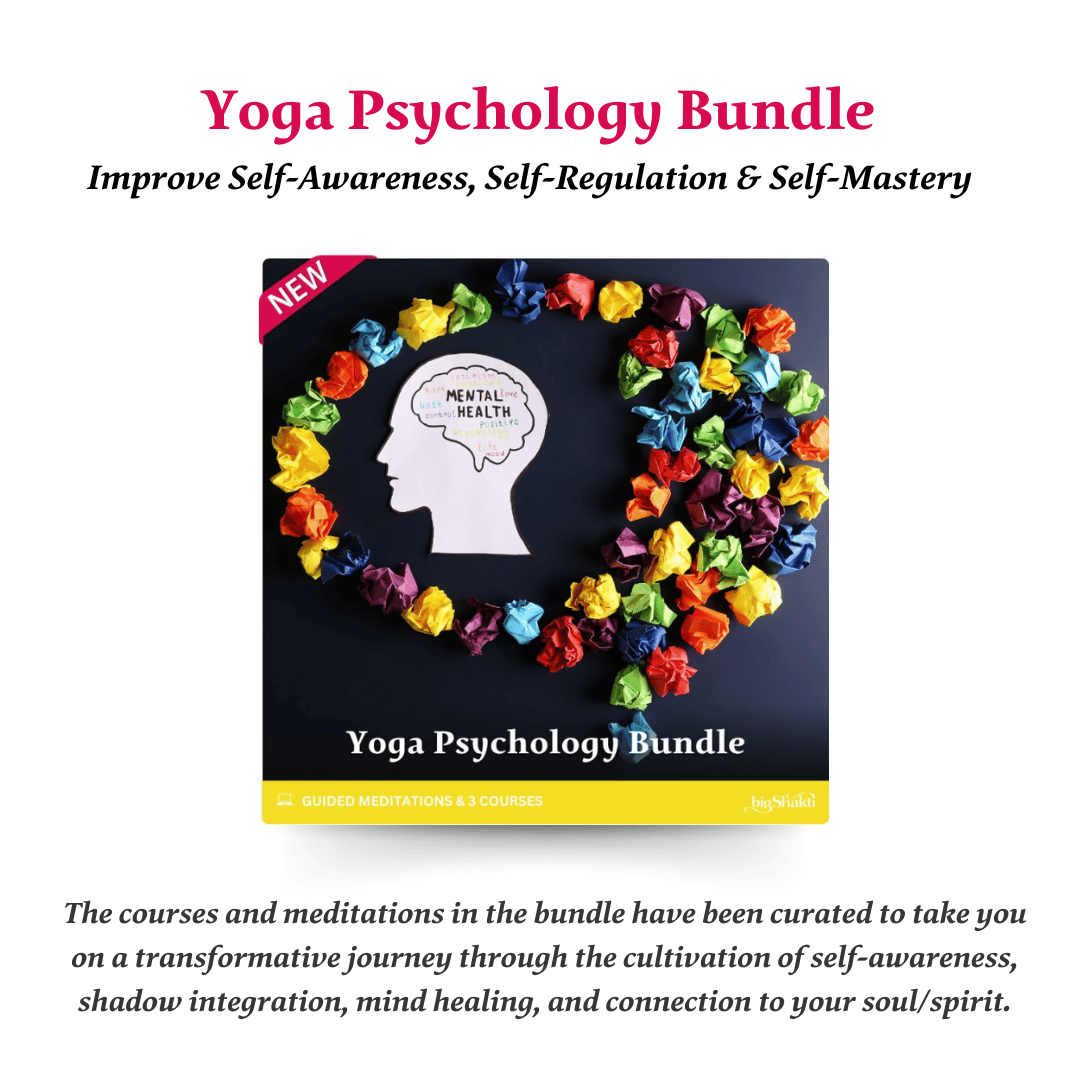
For those who wish to study this systematically, our Yoga Psychology Bundle brings together the core teachings and practices including:
The bundle of teaching offers a structured and progressive journey from understanding the architecture of the mind, to meeting the shadow, to stabilising awareness through meditation.
This progression is intentional. Yoga psychology is not absorbed through inspiration alone; it is assimilated through study, reflection, and sustained practice. When the philosophical map is understood, the shadow approached with courage, and awareness strengthened through meditation, something steady begins to form within.
What we are offering is not merely content, but a coherent framework; one that supports long-term inner development rather than temporary motivation.
For those who feel ready to engage this work more deeply, investing in your understanding of yoga psychology is, in truth, an investment in the clarity and stability of your own mind. And that is work worth doing carefully.
Find out more about our Yoga Psychology Bundle
Shadow Work: Making the Unconscious Conscious
From this broader study of yoga psychology, one theme continues to surface with particular urgency — the necessity of understanding the shadow.
One of the major projects emerging from this focus is our latest ebook: Understanding Shadow Symbols - Revealing Hidden Aspects of the Self. Which we are genuinely excited about.
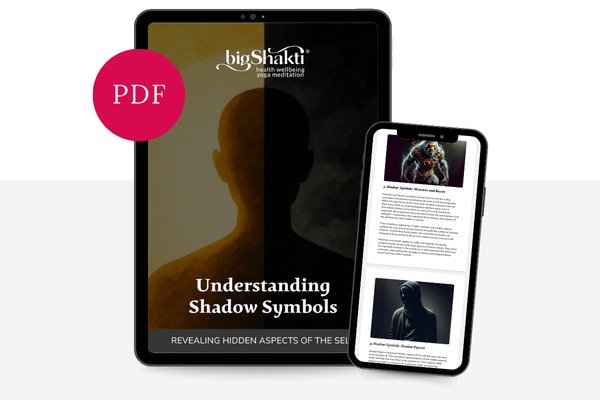
This concise guide introduces prominent shadow symbols that appear across myth, dreams, meditation, and daily life — dragons, dark figures, tricksters, underworld journeys, and more. Each is explored through the lens of yogic psychology, with insights from Jungian thought, helping you recognise how symbolic material reflects instinctual drives, emotional patterns, and hidden identifications within your own psyche.
Rather than approaching the shadow as something to conquer, this ebook offers a steady, grounded method of inquiry. You will find clear explanations, cross-cultural perspectives, reflection questions, and a simple meditative practice to begin working consciously with symbolic material.
It is designed for students, practitioners, and sincere seekers who wish to deepen their understanding without becoming overwhelmed; a practical entry point into shadow integration.
If you are ready to move from theory into personal exploration, this small investment can become a meaningful step in illuminating what has long remained unseen.

Shadow work is not about dramatizing darkness. It is about maturity. When aspects of ourselves are judged, rejected, or repressed, they do not disappear. They continue to influence behaviour, relationships, health, and self-perception. Yoga psychology offers precise ways to identify how these formations arise and how they can be integrated without bypassing or self-condemnation.
As Carl Jung observed:
“Until you make the unconscious conscious, it will direct your life and you will call it fate.”
The yogic tradition goes further by offering structured methods such as mantra, meditation, and self-inquiry to reorganise the inner field.
If this area resonates with you, you may wish to read the following articles:
Both articles explore how conditioning forms and how awareness begins to loosen its hold.

What Are Samskaras?
Have you ever wondered why you keep responding to life in the same way, even when you know a different response would serve you better? Why does anxiety rise in familiar situations long after the original threat is gone? Why do certain relationships, habits, or emotional patterns seem almost impossible to change, no matter how much you understand them?
The answer, according to the yogic tradition, lies in samskaras — the deep impressions left on the mind by every experience you have ever had. They are the invisible architecture of your inner life. Understanding them is not merely an intellectual exercise. It is, in many ways, the beginning of genuine self-knowledge.
📕 Read Article: What Are Samskaras?

I realize that under the circumstances you have described, you feel the need to see clearly. But your vision will become clear only when you can look into your own heart. Without, everything seems discordant; only within does it coalesce into unity. Who looks outside dreams; who looks inside awakes." Carl Jung - Letter to Fanny Bowditch, 1916.
Reflection
Here are 5 reflection points to consider as you move through the month. As you reflect on these questions, observe one recurring reaction in your life.
When it arises, pause.
Notice the thoughts, bodily sensations, and emotional tone.
Ask quietly: Is this reaction current, or is it an old impression replaying itself?
Do not try to change it immediately. Simply witness it as a pattern.
The shift from “This is me” to “This is a samskara moving through the mind” is subtle, but it is the beginning of freedom.
1. Mapping Your Mind (Structure of the Mind) Sit quietly and observe your inner landscape for five minutes. Afterwards, write down what you noticed — thoughts, feelings, sensations, impulses. Can you start to distinguish between the thinking mind, the feeling layer, and the deeper witnessing awareness beneath them? What surprised you about what arose?
2. Tracing the Groove (Samskaras) Think of one reaction you have that feels automatic — a familiar mood, a habitual response to stress, or a recurring thought pattern. When did you first notice it? Can you trace it back to an earlier time in your life? Simply observe it without trying to change it. What does it feel like to witness it as a pattern rather than as "you"?
3. Uncovering the Lens (Conditioning) Choose a belief you hold about yourself — something you consider simply "true." Now ask: who taught me this? Where did I absorb it? Would I have this belief if I had grown up in a completely different environment? Sit with the possibility that it is a lens, not a fact.
4. Meeting the Ego (Ego and Unconscious Material) Recall a recent moment when you felt defensive, embarrassed, or the need to prove yourself. Without self-judgment, ask: what was the ego trying to protect here? What would have felt threatened if you had let that moment pass unchallenged? Write freely for ten minutes.
5. The Root of the Ache (Mechanics of Suffering) Bring to mind a current source of discomfort or dissatisfaction in your life. Rather than focusing on the external situation, turn inward and ask: What am I clinging to, or what am I resisting, that is sustaining this pain? Notice whether the suffering lives more in the circumstance itself, or in your relationship to it.

That's all from us for now. Take care and stay well 🧘🏼
Dr Swami Shankardev Saraswati & Jayne Stevenson
Connect with us on...
INSTAGRAM | FACEBOOK | LINKEDIN | YOUTUBE

Comments