

Have you ever wondered why you keep responding to life in the same way, even when you know a different response would serve you better?
Why does anxiety rise in familiar situations long after the original threat is gone?
Why do certain relationships, habits, or emotional patterns seem almost impossible to change, no matter how much you understand them?
The answer, according to the yogic tradition, lies in samskāras — the deep impressions left on the mind by every experience you have ever had.
Samskāras are the invisible architecture of your inner life. Understanding them needs to arise not merely via an intellectual exercise, but via true self-reflection and meditation. This is, in many ways, the beginning of genuine self-knowledge.
The Meaning of Samskāra
The Sanskrit word samskāra (pronounced samskaara) comes from the roots sam, meaning ‘complete’ or ‘well-formed’, and kara, meaning ‘action’ or ‘that which is made’. Together, they point to something deeply formed, imprinted, and refined.
In yoga psychology, samskāras are the subtle impressions left by every thought, emotion, sensation, and action (karma) within the chitta, the storehouse of our memories.
They are not abstract concepts. They are real formations in our bodies and minds, as real as grooves worn into rock by flowing water. And just as water naturally flows back into those grooves, the mind naturally follows the channels that samskāras have carved.
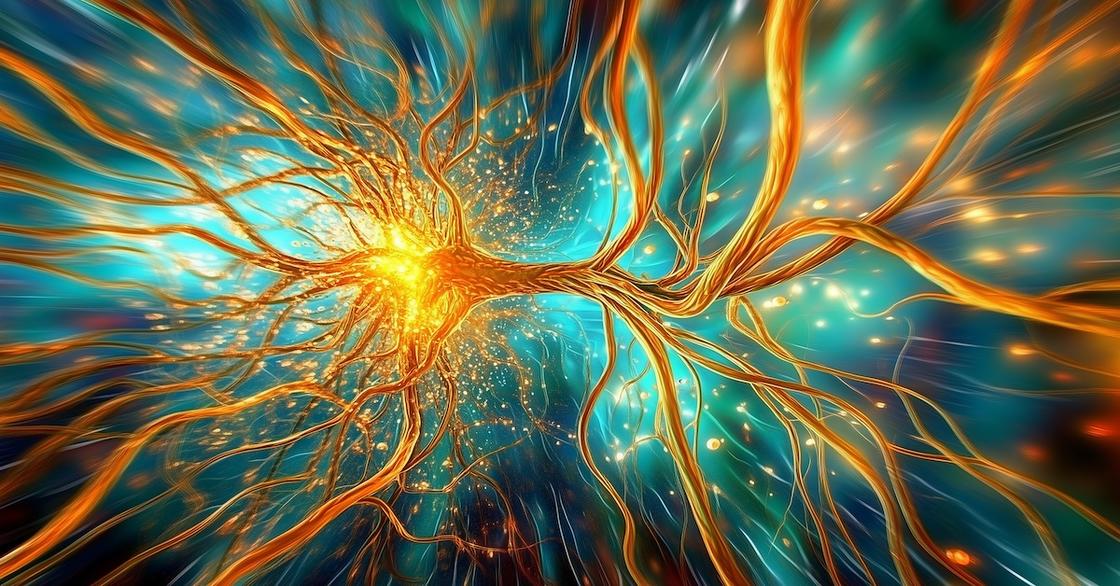
Patanjali, in the Yoga Sutras, describes samskaras as one of the primary sources of the mental fluctuations (vrittis) that disturb the clarity of consciousness. They operate largely beneath the surface of our ordinary awareness, which is precisely what makes them so powerful. And this is why authentic self-knowledge and wisdom are derived using tools that enable our awareness to go deeper than mere thinking. We need to access deep feeling and intuition.
Samskāras are the residue of a life lived. The question is not how to erase them, but how to understand and ultimately transform them.
How Samskāras Are Formed
Every experience you have, every joy, every wound, every moment of fear or love or shame, leaves a trace in the mind. Modern neuroscience confirms what yogis observed thousands of years ago: experience physically shapes the brain. The yogic understanding simply extends this further, recognising that impressions are formed not only neurologically but at the level of the subtle body, in the energy field of the mind itself.
Samskāras accumulate across three primary channels:
- Repeated action. Every time you act, speak, or think in a particular way, you reinforce that pattern. The more a groove is used, the deeper it becomes. This is why habits, both healthy and destructive, become self-perpetuating over time.
- Intense experience. A single powerful event can leave a lasting impression, shaping perception and behaviour for years. Trauma, which is profoundly damaging, is perhaps the most familiar example. But profound joy, spiritual insight, and experiences of deep love also leave their marks, and they are profoundly healing.
- Deep sleep and the unconscious. Samskāras do not rest when you do. They continue to operate through the dreaming and deep sleep states, reinforcing patterns and resurfacing as the emotional residue you wake with, for example, as the inexplicable anxiety, the sadness without a name.
Crucially, yoga also teaches that samskāras carry over from one lifetime to another. This is the yogic understanding of karma: that deeply embedded impressions are not extinguished at death but continue to condition experience in future incarnations. This is the yogic explanation for why some tendencies seem to arise at birth, and why some individuals carry gifts or wounds that have no obvious origin in this life.
Samskaras and Suffering
The Yoga Sutras categorise samskāras linked to suffering as klesha-samskāras — impressions animated by the five afflictions (kleshas): ignorance (avidyā), ego-identification (asmitā), attachment (rāga), aversion (dwesha), and the clinging to existence (abhinivesha).
These are not simply psychological tendencies. They are the structures through which we misperceive reality. When samskāras are coloured by the kleshas, we do not see the world clearly. We see it through the lens of our accumulated conditioning, responding not to what is actually present but to what past experience has taught us to expect.
This is how the anxious person sees a threat in neutral situations. How the person conditioned by early rejection interprets ordinary aloneness as abandonment. How the individual shaped by harsh self-criticism cannot receive genuine care. The world becomes a mirror of the mind’s grooves.
The mind, once shaped by experience, tends to recreate what it knows, even when what it knows causes pain.
Understanding this is not depressing. It is, in fact, profoundly liberating. Because it means that suffering is not written into reality. It is written into the mind, and the mind can be rewired.
Not All Samskaras Are Afflictive
It is important to recognise that not all samskāras are sources of suffering. The tradition distinguishes between klesha-samskāras (impressions rooted in the afflictions) and dharmic samskāras — positive impressions formed through virtuous action, spiritual practice, compassion, and self-inquiry.
Every time you practice āsana, meditation, or prānāyāma with genuine attention, you are creating new impressions. Every act of kindness, self-honesty, or conscious restraint forms a counterweight to the grooves of reactivity. This is why yoga emphasises consistent, sustained practice: not as performance, but as the deliberate cultivation of a different kind of mind.
The path of yoga is, in essence, the path of transforming samskāras, weakening those that bind and strengthening those that liberate.
Samskaras, the Unconscious, and Western Psychology
Western depth psychology arrived at a remarkably similar understanding through a completely different route. Carl Jung’s concept of the unconscious — particularly the personal and collective unconscious — closely maps onto the yogic understanding of chitta and its deep impressions. Jung’s ‘complexes,’ emotionally charged clusters of experience that operate autonomously beneath conscious awareness, are, in many ways, what yoga would call powerful samskaras.
Freud’s concept of repetition compulsion, the unconscious drive to repeat past traumas, reflects the same mechanism that yoga describes: the mind following its own grooves, recreating familiar experiences even when those experiences cause pain.
The key difference is that yoga does not stop at insight. While psychotherapy rightly recognises that bringing unconscious material into awareness is essential, the yogic system goes further, offering direct energetic practices — mantra, pranayama, yoga nidra, meditation, and self-inquiry — that act on samskāras at the level of the subtle body, not merely the conceptual mind.
How Yoga Works with Samskāras
The goal is not to excavate every samskāras intellectually, which would be neither possible nor useful. It is to systematically reduce the power of afflictive impressions while cultivating positive ones, until the light of awareness itself can see through even the deepest conditioning.
The tradition outlines several primary methods:
- Pratipaksha bhāvana — cultivating the opposite. When a negative pattern arises, deliberately introduce the antidote: compassion where there is contempt, patience where there is irritation, inquiry where there is reactivity. This weakens the old groove and begins to form a new one.
- Meditation and yoga nidra — entering the deep states of consciousness where samskāras are stored. Yoga nidra, in particular, operates in the hypnagogic state, the threshold between waking and sleep, where the subconscious is most receptive to new impressions and old ones can be gently dissolved.
- Mantra japa — the systematic repetition of sacred sound. Mantra works at the vibrational level of the mind, introducing a new frequency that gradually overrides the resonance of afflictive samskāras. Over time, the mantra itself becomes a samskāras — but one of purification and steadiness.
- Pranayama and breathwork — regulating the breath directly influences the energy body and the vrittis in which samskāras move. A steadied breath creates the internal conditions for old impressions to surface safely, be witnessed, and lose their charge.
- Svadhyaya (self-study) — honest, compassionate self-observation. The capacity to watch your own mind without flinching, without excessive self-criticism, and without identification is perhaps the most fundamental skill in working with samskāras. It is the light that makes them visible.
The Long View: Why This Takes Time
One of the most important things the yogic tradition teaches about samskāras is that their transformation is not a quick process. The word abhyāsa, consistent, sustained practice, appears again and again in the texts for good reason. The impressions accumulated over a lifetime, or many lifetimes, do not dissolve in a weekend retreat.
This is not a discouraging fact. It is a reorienting one. It invites us to approach the inner life with the same steady care we would bring to cultivating a garden. Some plants take seasons to root. Some ground needs many rounds of tending before it is ready to receive new seeds.
Patanjali is clear: practice that is dirgha kala nairantarya satkara asevitah — long in duration, uninterrupted, and engaged with sincerity and devotion — creates a dridha bhumih, a firm ground. It is on this firm ground that genuine freedom from conditioned suffering becomes possible.
The transformation of samskaras is the slow, patient work of becoming more fully who you are beneath the conditioning.
A Practice: Witnessing Without Adding
One of the simplest and most powerful ways to begin working with samskāras is conscious witnessing.
For five minutes each day, sit in stillness and observe whatever arises in the mind — thoughts, memories, impulses, emotions. Do not analyse them. Do not judge them. Do not try to change them. Simply observe, with the recognition: “This is a samskara arising. It is not the totality of who I am.”
This small but consistent practice begins to introduce a space between stimulus and response. Between the arising of a conditioned pattern and your identification with it. In that space, over time, the possibility of genuine choice arises.
Explore the Yoga Psychology of the Mind
If this article has opened a door for you, the next learning step can be found in our Introduction to Yoga Psychology & Psychotherapy course. It takes you into the architecture of the yogic mind — the koshas, the kleshas, the nature of consciousness, and the practical tools for working with the patterns that run us. It is an intermediate-level course that blends philosophy, psychology, and guided meditation.
For those ready to go deeper into shadow work and the healing of the unconscious mind, see our Yoga Psychology Bundle. It brings together three courses and a therapeutic meditation series into a complete pathway: Introduction to Yoga Psychology (the course mentioned above), Facing the Shadow, and Healing the Mind (Ajapa Japa Stage 1).
And if you’d like to explore these ideas in an on-demand workshop context, the Sāṃkhya Philosophy & Mental Health Workshop offers a two-hour deep dive into the philosophical framework from which the understanding of samskaras arises.
With the right understanding and practice, it is possible to meet your mental conditioning with clarity and compassion. That is the promise of the study of yoga.

Comments