

Last month, we explored the architecture of the mind through the lens of yoga psychology:
- How mental impressions, or samskāras, form and deepen over a lifetime;
- How the conditioning we absorb from family, culture, and early experience shapes not just what we think but how we perceive reality itself; and
- How the mechanics of suffering operate far beneath the surface of ordinary awareness.
This April e-Mag focuses on mental illness, such as anxiety that won’t switch off, the depression that drains colour from life, the emotional reactions that feel bigger than the moment, and the chronic stress that has quietly become a way of being rather than a passing state.
The question we are asking this month is not “what is the mind?” but “what does it feel like when the mind becomes the problem — and what can actually help?”
The Silent Epidemic
Mental health challenges are among the most common experiences of modern life and among the least honestly spoken about.
- Anxiety affects hundreds of millions of people globally.
- Depression is now the leading cause of disability worldwide.
- Emotional dysregulation underlies much of the conflict and suffering in our relationships and working lives.
- Chronic stress has become so normalised that many of us no longer recognise it as a state at all.
It has simply become the background noise of existence.
Yoga psychology offers us a framework for understanding these states and tools for working with them. It sees anxiety as scattered prana, life force that has lost its ground. It sees depression as a withdrawal of inner light, a heaviness of the tamas guna that the right practices can steadily dissolve. It sees emotional storms as samskāras, old impressions from past experiences firing in response to present-day triggers. And it offers practices that loosen their grip without requiring us to relive every wound.
Most importantly, yoga psychology insists on something modern medicine is only beginning to fully embrace: that the mind is not fixed. It is plastic, responsive, and capable of profound transformation at any age, in any circumstance. The path is real. The practices work. And the healing runs deeper than symptom management.
The thing to remember is that you have more power over your inner life than you have been told.

The Medicine of Sacred Sound
Among the most powerful and underutilised tools in yoga therapy is mantra, the practice of working with sacred sound to directly reshape the mind. Mantra is derived from man, meaning expansion, and tra, meaning to liberate and protect. A mantra is literally a tool for freeing the mind from its own loops by expanding and liberating the energy trapped in them.
Where anxiety scatters prana and depression stills it, mantra works to restore coherence.
Regular repetition interrupts habitual thought patterns, provides the nervous system with a steady rhythm to anchor in, and gradually replaces reactive mental grooves with sattwic (clear, luminous) ones. Rather than suppressing difficult emotions, mantra loosens the energy locked within them, making it available for healing and self-understanding.
In yoga therapy, breath-linked mantras, such as So'Ham, which coordinate sound with the inhale and exhale, are particularly effective. This mantra is the foundation of Ajapa Japa, one of the most powerful methods to restore mental health and inner resilience. This practice bridges the conscious and unconscious mind, calms the autonomic nervous system, and brings the practitioner back into the present moment with remarkable efficiency. Even a few minutes of practice can noticeably shift the inner climate.
Learn more about the power of Mantra
- Mantras - Their Role In Yoga and Spiritual Growth
- Breath, Mantra, and Mindfulness in the Management of Anxiety
- Mantra as Medicine: A Yogic Approach to Psychological Resilience
- How Mantra Therapy Supports Emotional Healing
- Mantra Therapy: Transforming Thought Patterns for Emotional Healing & Mental Wellbeing

10 Mantras for Anxiety: Calming the Inner Storm Through Sacred Sound
Anxiety is often described as a storm within, the mind racing ahead, the breath shallow, the heart unsettled, a deep feeling of restlessness that doesn't allow you to find any peace. While occasional worry is natural, chronic anxiety can feel as though we are trapped in a constantly tense body and a mind that won’t quiet down and let us rest.
When this occurs, the sympathetic nervous system, which is designed to respond to stress, remains constantly activated. This system releases stress chemicals like cortisol and adrenaline that prepare the body for “fight or flight” by increasing heart rate, elevating blood pressure, sharpening focus, and diverting energy from long-term systems like digestion and immunity.
This is all helpful in a crisis, but harmful when chronically activated. Over time, this ongoing activation creates a baseline of tension in both the body and mind, making it increasingly difficult to return to a state of calm without conscious intervention.
This is where mantra becomes a practical and effective support. Rather than trying to force the mind to be quiet, mantra gives it a steady point of focus — a rhythmic, repetitive sound that helps regulate the breath, settle the nervous system, and gradually redirect mental activity. The consistent pattern begins to replace the scattered, anxious loops with something more ordered and stable.
📕 Read Article: 10 Mantras for Anxiety: Calming the Inner Storm Through Sacred Sound

Trauma and the Energy Body: Using Yogic Tools to Heal Deep Wounds
Trauma is not only psychological. It is energetic. Experiences that overwhelm the mind also imprint themselves on the body - especially on the subtle body, known in yoga as the pranamaya kosha. When we experience trauma, our prana (life force) contracts, scatters, or becomes frozen. This disruption in the flow of energy often persists long after the event has passed, contributing to anxiety, fatigue, emotional reactivity, and disconnection from self.
Healing trauma, then, must include the restoration of prana.
Yogic tools such as breath, visualisation, and mantra therapy are uniquely suited to this task. They work not only through the intellect, but directly through the nervous system and energy body.
📕 Read Article: Trauma and the Energy Body: Using Yogic Tools to Heal Deep Wounds
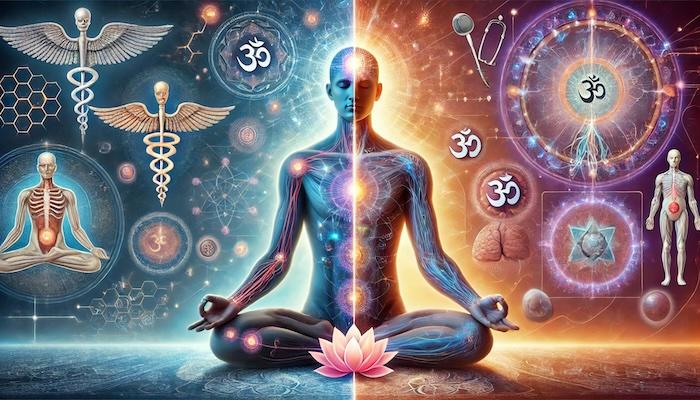
East meets West for Mental Health
As the pace of modern life continues to accelerate, many of us are seeking steadier ground—something deeper and more enduring.
The ancient wisdom of the East remains profoundly relevant in our modern quest for mental health and inner peace. While Western approaches often focus on symptom management, these ancient wisdom traditions offer a comprehensive understanding of the root causes of mental suffering and practical pathways to lasting transformation.
Two of the most popular and essential Indian spiritual texts are the Bhagavad Gita and Patanjali's Yoga Sutras. They are sublime texts that describe the path to the highest states of self-realization. The problem is that both come from very different approaches.
One way to understand these contrasting approaches is that the Gita illuminates an extroverted path that fully embraces life's complexities, while Patanjali charts an introverted journey via the eight-fold path (Raj or ashtanga yoga), which moves practitioners away from life and worldly entanglements.
📕 Read Article: East meets West for Mental Health
Yoga Psychology & Mental Health
These podcast conversations offer a deeper look at how yoga psychology understands and works with mental and emotional patterns. Rather than analysing symptoms alone, these teachings explore the structure of the mind, the movement of prāṇa, and the practices that support steady regulation over time.
🔗 Beyond Suffering – Eastern Wisdom Traditions as Maps to Mental Wellness
A broad and practical look at how systems like Sāmkhya, Yoga, and Vedānta map the mind — and how these maps can be applied to mental health today.
🔗 Understanding Mental Health through Sāmkhya
A clear explanation of the inner architecture of the mind, and how imbalance arises across its different layers.
🔗 How Stress Affects the Mind — and What Can Be Done
Explores the physiological and energetic effects of stress, alongside practices that help restore stability.
🔗 Prāṇa, Spiritual Growth, and Connection to Life Energy
A deeper look at prāṇa itself — how it moves, how it becomes disturbed, and how it can be cultivated again.
🔗 Ajapa Japa: Healing the Mind
An introduction to a foundational meditation practice that works directly with the subconscious and nervous system.

Reflection
"As a spider moves along the thread, as small sparks come forth from fire, so from the Self come all mantras, all worlds, all gods, all beings.”
Here are 5 reflection points to consider as you move through the month.
1. Mapping Your Mind (Structure of the Mind) Sit quietly and observe your inner landscape for five minutes. Afterwards, write down what you noticed — thoughts, feelings, sensations, impulses. Can you start to distinguish between the thinking mind, the feeling layer, and the deeper witnessing awareness beneath them? What surprised you about what arose?
2. Tracing the Groove (Samskaras) Think of one reaction you have that feels automatic — a familiar mood, a habitual response to stress, or a recurring thought pattern. When did you first notice it? Can you trace it back to an earlier time in your life? Simply observe it without trying to change it. What does it feel like to witness it as a pattern rather than as "you"?
3. Uncovering the Lens (Conditioning) Choose a belief you hold about yourself — something you consider simply "true." Now ask: who taught me this? Where did I absorb it? Would I have this belief if I had grown up in a completely different environment? Sit with the possibility that it is a lens, not a fact.
4. Meeting the Ego (Ego and Unconscious Material) Recall a recent moment when you felt defensive, embarrassed, or the need to prove yourself. Without self-judgment, ask: what was the ego trying to protect here? What would have felt threatened if you had let that moment pass unchallenged? Write freely for ten minutes.
5. The Root of the Ache (Mechanics of Suffering) Bring to mind a current source of discomfort or dissatisfaction in your life. Rather than focusing on the external situation, turn inward and ask: What am I clinging to, or what am I resisting, that is sustaining this pain? Notice whether the suffering lives more in the circumstance itself, or in your relationship to it.


Behind the Scenes
After our travels, Jayne and I feel as though we have only just truly arrived in Melbourne — still finding our feet, still settling into the rhythms of our new life here. There is something beautifully disorienting about beginning again, and we are embracing it fully.
Autumn in Melbourne is a quiet gift. The days move between warmth and cool with golden light in the mornings, and a gentle chill by evening. We have been making the most of it, spending time outdoors and finding our way into a grounded daily routine.
Sadhana anchors each morning. We are deepening our mantra practice, learning new mantras that have brought a fresh current of energy and focus into our days. In the afternoons, we have been going to the gym and swimming at the public baths near our home — a simple pleasure that has quickly become one of our favourite parts of living in this neighbourhood.
Life feels rich, full, and quietly extraordinary.
Sankalpa Course
Jayne, meanwhile, is deep in the creative process of developing a new course on sankalpa — the yogic art of sacred intention — which she hopes to offer later in the year. It is a subject she has long felt deserves far more depth and honesty than it typically receives, and she is pouring that conviction into every layer of what she is building. Those drawn to the transformative power of intention will not want to miss it when it arrives.
Jyotish (Indian Astrology) training
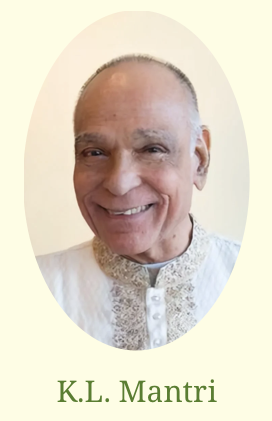
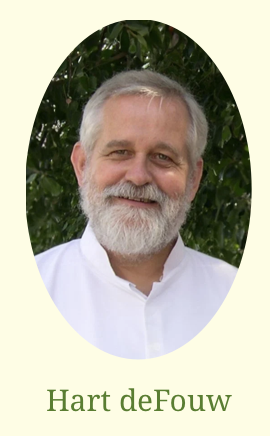
One of the most meaningful aspects of recent months has been the reunion with my Jyotish guru, Hart de Fouw — one of the foremost Western scholars and teachers of Vedic astrology alive today. After time apart, stepping back into study with Hart has felt like picking up a conversation that never truly ended, only paused. There is a particular quality of transmission that comes from working closely with a master of this depth, and I have felt it immediately rekindled. Hart carries within him the living legacy of his own guru, the great K.L. Mantriji — a towering saint and one of the most extraordinarily gifted astrologers of his era. Through Hart, that lineage breathes on, and to sit in his teaching is to feel, however distantly, the grace of a truly illumined mind still at work in the world.
The first course I attended with Hart focused on one of the most challenging and important dimensions of Jyotish — how to work skillfully with difficult planets and stressful karma. Rather than simply identifying where struggle lies in a chart, the course offered specialized techniques for developing precise astrological remedies: practical, time-honoured methods for softening karmic pressures and supporting the individual in navigating periods of difficulty with greater clarity and resilience. This is the kind of nuanced, applied knowledge that separates a capable astrologer from a truly helpful one.
The second course, which is currently underway, turns to varshaphala — the Jyotish system of solar return charts. Cast for the exact moment the Sun returns to its natal position on one's birthday each year, the varshaphala chart offers a remarkably refined map of the year ahead. What makes this system so compelling is its precision: it not only reveals the themes, opportunities, and challenges likely to arise during the year, but also provides a framework for understanding how to orient oneself, what to emphasise, and how to move through the year with greater wisdom and intention. It is astrology as a living, practical guidance system — and studying it with Hart makes it all the more potent.
Swami Shankardev
[Swami Shankardev is currently focusing on Indian astrology readings - for more information, go to Jyotish - Indian Astrology Consultations at Big Shakti.com]
That's all from us for now. Take care and stay well 🧘🏼
{{global.bigshaktisig}}

Comments