

Over the past few months, we have discussed the foundations of how yoga understands the human mind, through to some of the most pressing challenges of our inner lives.
In April, we turned our attention to the yoga of mental health, exploring how the ancient insights of yoga psychology offer us a remarkably clear lens for understanding anxiety, depression, emotional dysregulation, and the stress patterns that so many of us carry. Rather than viewing these experiences as signs of weakness or disorder, we are encouraged to see them as our innermost Self communicating a profound invitation to look both within and without, and to make the changes our lives are calling for.
The distressing feelings we experience are a form of language. They are signals telling us that we are moving away from connection, integration, and wholeness, and toward fragmentation, imbalance, and the slow erosion of our deeper nature. They are the psyche's way of saying: something here needs attention. Something here needs healing.
That shift in perspective from pathology to meaning, from shame to self-inquiry, can itself be transformative. But understanding the map is not the same as walking the territory.
This month, we arrive at the practice that ties everything together: Meditation.
Meditation, when understood in its deeper sense, is not a quick solution. It is a steady process of learning how to be with the mind as it is, and gradually, through that relationship, allowing it to change.
At times, this may feel subtle. At times, it may feel confronting. At times, it may feel like nothing is happening at all. But over time, something begins to shift.
Reactivity softens. Clarity increases. Space appears where there was once only habit.
This is the work. And it unfolds, not through force, but through sustained awareness. Wherever you are in your practice, that is where the work begins. With steadiness. With patience. And with a willingness to observe.
To overcome suffering requires a committed and sustained engagement with meditation as a direct, lived method for:
- stabilizing the mind
- observing its patterns with clarity and compassion
- gradually, patiently reshaping the mental impressions that drive so much of our suffering
And this takes time; because reshaping the mind is the work of a lifetime.
This edition of our emag offers both the understanding and the tools to begin or deepen that direct encounter with your own mind.
Blessings
— Jayne & Swami Shankardev

Why Meditation Matters for Mental Health
If the earlier stages of this journey have helped us understand the structure of the mind and the causes of distress, meditation is where that understanding becomes active.
Yoga psychology makes a simple but profound point:
Understanding alone does not change the mind.
Awareness does.
The patterns that shape our experience (our reactions, emotional habits, and recurring thoughts) are not held at the level of intellect. They are embedded more deeply, as impressions formed over time. Meditation is the method through which these patterns become visible. And once they are visible, they begin to loosen.
In this sense, meditation is one of the most direct ways of working with and improving mental health.

Teaching Meditation for Mental Health: Beyond Technique
For yoga teachers, this understanding shifts the role of meditation quite significantly. Meditation is no longer simply a technique to guide. It becomes a process to support.
From the perspective of yoga psychology, the mind is shaped by conditioning; by accumulated impressions that influence how we think, feel, and respond. These patterns operate largely outside conscious awareness, and yet they drive much of our experience. Meditation works by bringing these patterns into awareness through observation. This is why, when students begin meditation, their experience is often unexpected. Instead of calm, they may encounter:
- restlessness
- repetitive thinking
- emotional discomfort
- difficulty settling
This is not a failure of practice; it is actually the beginning of it. What was previously operating in the background is now becoming visible.
The role of the teacher, then, is not to remove this experience but to help students remain steady within it. To normalise it. To contextualise it. To support the gradual development of awareness. This is where meditation begins to shift from something we do to something we develop.

Meditation for Mental Health: Matching Practice to State
One of the most important considerations is that not all meditation practices suit all mental states. Different conditions of the mind require different entry points. Examples include:
Anxiety
When the mind is restless, scattered, and overactive, there is often an excess of movement in the system. The aim here is not to force stillness, but to gently stabilise attention.
Helpful approaches include:
- simple breath awareness
- lengthening the exhalation
- mantra linked with breath (such as So-Ham)
- grounding attention in the body
The emphasis is on rhythm and repetition.
Depression
When the mind is heavy, withdrawn, or lacking energy, stillness alone is not always supportive. The focus shifts toward gentle engagement.
Helpful approaches include:
- guided meditation
- shorter, structured practices
- slightly deeper breathing
- mantra or visualisation
Here, meditation becomes a way of re-establishing connection.
Emotional Dysregulation
When emotions feel overwhelming or unpredictable, the key is space, not suppression. Meditation supports the development of an observing awareness - the ability to notice experience without immediately reacting.
Helpful approaches include:
- observing thoughts and feelings as they arise
- anchoring attention to breath
- short, regular check-ins
Over time, this creates a gap between stimulus and response.
Stress Patterns
When the system is chronically activated, meditation becomes a tool for regulation.
Helpful approaches include:
- slow, rhythmic breathing
- body awareness practices
- Yoga Nidra-style relaxation
- simple mantra repetition
Consistency is more important than depth here.
Trauma Sensitivity
For those with heightened sensitivity or overwhelm, meditation must be approached carefully. The aim is stability, not intensity.
Helpful approaches include:
- eyes-open or externally anchored awareness
- very short practices
- focusing on safety and grounding
- avoiding forceful breath control
In these cases, meditation is about staying within capacity.
A Simple Starting Point
If you are unsure where to begin, start with a simple 5-10min breath-based practice: Breath Awareness with Mantra
- Sit comfortably with your spine upright
- Allow the breath to move naturally
- As you inhale, mentally note So
- As you exhale, mentally note Ham
- Do not force the breath, simply observe
- When the mind wanders, gently return to the breath
This practice works quietly to stabilise attention and reduce mental turbulence.
Done consistently, this is far more effective than complex techniques applied occasionally.
Alternatively, try our free Ujjayi Breathing Practice to recentre and ground yourself in times of mental unrest.
For those wishing to explore meditation more systematically, structured guidance can make a significant difference. Our Therapeutic Meditation Bundle for Psychological Wellbeing brings together six foundational practices used to support:
- emotional regulation
- nervous system balance
- mental clarity
- inner stability
These practices are the same methods used in our therapeutic consulting to work directly with the mind.
🔖 Find out more about the meditation bundle →
The Therapeutic Journey: Integrating Mantra, Meditation, and Self-Inquiry
Healing is rarely the result of one single technique or insight. It unfolds over time, like a spiral, deepening layer by layer. In the yogic tradition, healing is a process of remembering wholeness: a journey that requires right effort, guidance, and integration.
Mantra, meditation, and self-inquiry are three foundational tools on this path. When practised together, they support a profound and lasting shift in one’s mental and emotional well-being. Each of these tools engages a different part of the psyche.
- Mantra works through vibration to regulate the nervous system and purify unconscious impressions.
- Meditation strengthens awareness and stillness, allowing for insight and integration.
- Self-inquiry brings conscious reflection, enabling us to witness, question, and ultimately transform the patterns that cause suffering.
Together, they form a therapeutic journey from fragmentation toward coherence. Read more about this approach:
📕 The Therapeutic Journey: Integrating Mantra, Meditation, and Self-Inquiry
Reflections To Meditate On
1. Mapping Your Mind (Structure of the Mind)
Sit quietly and observe your inner landscape for five minutes. Afterwards, write down what you noticed - thoughts, feelings, sensations, impulses. Can you start to distinguish between the thinking mind, the feeling layer, and the deeper witnessing awareness beneath them? What surprised you about what arose?
2. Tracing the Groove (Samskaras)
Think of one reaction you have that feels automatic - a familiar mood, a habitual response to stress, or a recurring thought pattern. When did you first notice it? Can you trace it back to an earlier time in your life? Simply observe it without trying to change it. What does it feel like to witness it as a pattern rather than as "you"?
3. Uncovering the Lens (Conditioning)
Choose a belief you hold about yourself, something you consider simply "true." Now ask: who taught me this? Where did I absorb it? Would I have this belief if I had grown up in a completely different environment? Sit with the possibility that it is a lens, not a fact.
4. Meeting the Ego (Ego and Unconscious Material)
Recall a recent moment when you felt defensive, embarrassed, or the need to prove yourself. Without self-judgment, ask: what was the ego trying to protect here? What would have felt threatened if you had let that moment pass unchallenged? Write freely for ten minutes.
5. The Root of the Ache (Mechanics of Suffering)
Bring to mind a current source of discomfort or dissatisfaction in your life. Rather than focusing on the external situation, turn inward and ask: What am I clinging to, or what am I resisting, that is sustaining this pain? Notice whether the suffering lives more in the circumstance itself, or in your relationship to it.
Further Reading
- Self-Awareness Mastery Through Meditation
- 10 Essential Skills for Effective Meditation
- Japa, Ajapa, and Ajapa Japa: Powerful Forms of Meditation
- Self Awareness, Self Regulation, Self Mastery
- What is Yoga Nidra Meditation?
- What is Mantra Japa Meditation?
For those interested in going deeper:
- explore the teachings and practices of our Yoga of Mental Health series.
- browse our library of guided meditation practices.
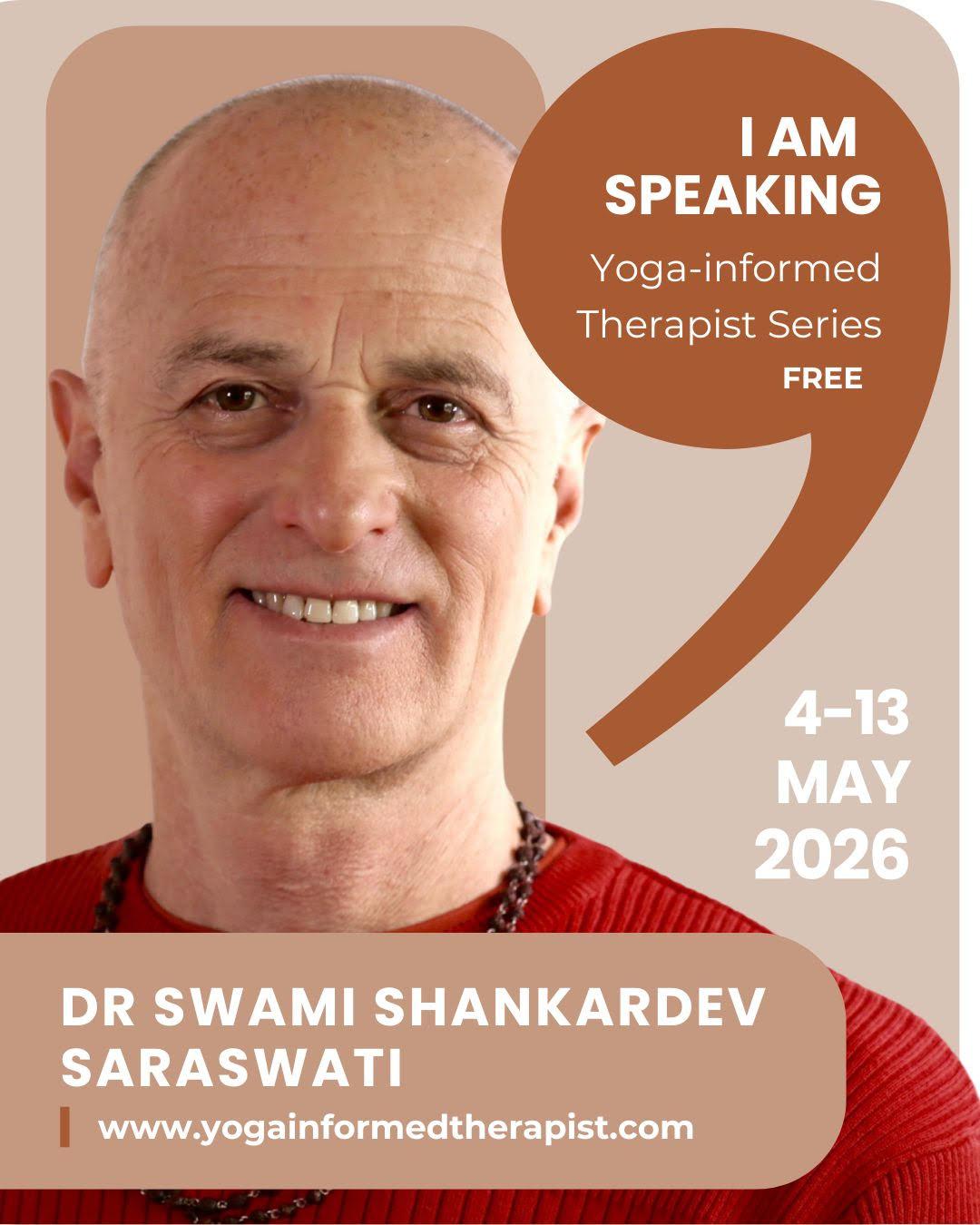
I’m thrilled to share that I'm part of the Yoga-Informed Therapist Interview Series, a free series hosted by Dr Lauren Tober from Yoga Psychology Institute.
If you’re a mental health therapist or coach who’s curious about integrating yoga into your clinical work - ethically, practically and with confidence - this is for you.
Over 10 days, you’ll hear from 20 practitioners (including me) on:
- how we actually bring yoga into our work
- our training pathways
- the ethical questions we’ve navigated
- the practices we bring into the therapy room.
This free series is podcast-style so you can listen on the go, and it runs 4-13 May.
🔖 Sign up for [FREE ACCESS] at www.yogainformedtherapist.com

Comments